Skip to content

Hand tool ERP software, from forging to export packing

eManage Hand Tool ERP is manufacturing and accounts software for forged hand tool makers. It controls steel by section and heat number, forging lots with die life and scale loss, finishing operations and job-work plating with ITC-04, and set assembly from size-wise stock with export packing. It is implemented on site by the eManage team from Ludhiana, Punjab.

Hand Tool ERP shop floor
  • 500+ plantsRunning eManage since 2000
  • On-site implementationBy our own engineers
  • Support you can callNamed engineer, phone and WhatsApp
  • GST built inE-invoice, e-way bill, ITC-04
THE FLOW

Five steps on eManage, from material in to dispatch

1 BAR STOCK2 FORGING3 MACHINING4 HEAT TREAT & QC5 EXPORT PACK
PLANT FLOW · HAND TOOL ERP
  1. 1 BAR STOCK Heat · section
  2. 2 FORGING Hammers · dies
  3. 3 MACHINING Grinding · polish
  4. 4 HEAT TREAT & QC Hardness · finish
  5. 5 EXPORT PACK Set · carton · LUT
eManage CORE ONE DATABASE · GST · PAYROLL
WHY PLANTS SWITCH

Sound familiar? eManage fixes all four

Hand tool units forge in lots, finish in a dozen small operations and sell in sets. Scale loss at the hammer, die life nobody counts, plating sent outside and a 12-piece set short of one size all hit the margin. This edition tracks the lot from billet to packed set.

Forging loss unknown

Scale loss and die strokes per lot are not recorded, so steel yield is a guess.

A dozen operations, no lot card

Grinding, polishing and plating rejections are not linked back to the forging lot.

Sets short of one size

Tool sets cannot be packed because one size is missing, discovered at packing.

Export documents retyped

Packing lists, invoices and shipping documents are prepared separately.

Here is how Hand Tool ERP handles each of these.

WHAT IT HANDLES

eManage covers every control point of a hand tool unit

8 controls that come built into Hand Tool ERP, each tied to the same lot, order and ledger.

Illustration: control points covered by Hand Tool ERP

Steel by section & heat

Forging lots & die life

Heat treatment batches

Machining & grinding

Plating & job work

Set assembly & packing

Inspection & export documents

GST, export & accounts

FREE DEMO

See eManage Hand Tool ERP with your own data

Send a few real documents before the call. An implementation engineer who knows your trade runs them through eManage, online or at your plant.

In the demo we show

  • A forging lot with billet weight and scale loss
  • Finishing operations on one lot card
  • Set BOM with a short-size alert
  • Export packing list and invoice

Book a free Hand Tool ERP demo

Name and phone are enough. We call within one working day.

We call within one working day. Your details are used only to arrange the demo; see the privacy policy.

WHAT CHANGES

What changes on the floor with eManage

The people and machines stay the same. Each movement is recorded where it happens, so the owner reads a screen instead of waiting for the month-end register.

Swipe the table sideways to see the eManage column.

Registers and Excel compared with eManage Hand Tool ERP
Area Running on registers / Excel Running on eManage Hand Tool ERP
Steel cutting Bar taken from the yard; off-cuts not returned Pieces cut and off-cuts weighed back against the bar
Die life Die repaired when it fails Strokes counted per die; repair flagged at the limit
Scale loss Guessed from the annual stock difference Forged weight against cut weight per lot and die
Plating Challan book; shortage argued with the plater Challan, receipt, shortage and ITC-04 per plater
Set packing Short size found when the carton is opened Set BOM shows buildable sets and the short size first
ON THE FLOOR

How eManage Hand Tool ERP works, stage by stage

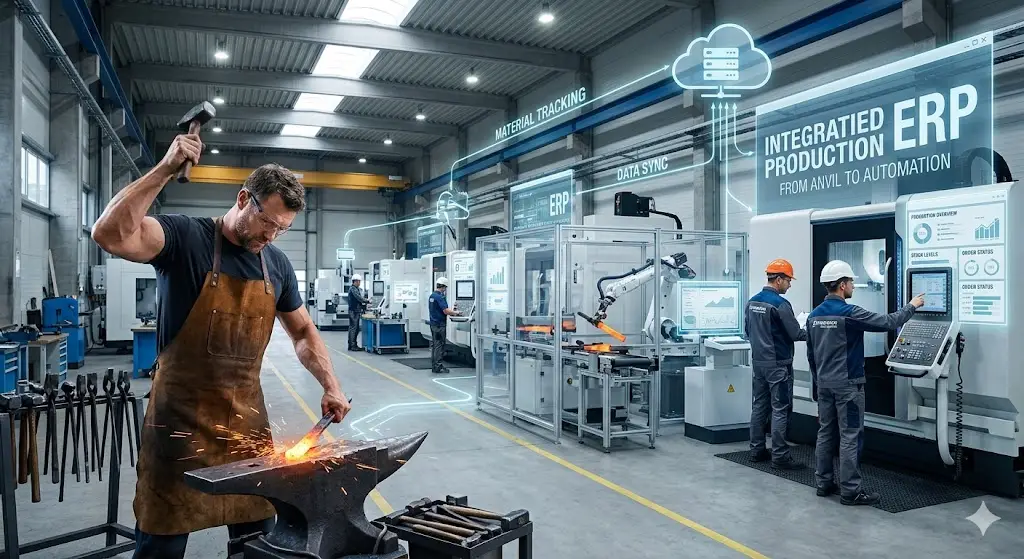
Forge shop

Billet in, forging lot out, scale loss counted

  1. 1

    Steel is cut to length against a forging order. Pieces cut, off-cuts returned and cutting scrap are weighed, so the bar reconciles.

  2. 2

    Each forging run records hammer, die, operator and shift. Strokes accumulate on the die, which goes for repair at your limit.

  3. 3

    Forged weight against cut weight gives scale loss. It is reported per lot and per die, where the material cost sits.

Die strokes and scale loss per lot
Hand Tool ERP, Billet in, forging lot out, scale loss counted

Finishing floor

A dozen operations, one lot card

  1. 1

    The lot card carries pieces through every finishing operation. Trimming, broaching, grinding, polishing and marking each record quantity passed and rejected.

  2. 2

    Plating and powder coating go out on a job-work challan. Returned pieces are counted against it and shortage is charged to the plater.

  3. 3

    Hardness, torque and dimensional checks are recorded on the lot. The export inspection file is complete when the last piece is polished.

Operation-wise rejection and plater shortage

Hand Tool ERP, A dozen operations, one lot card

Sets & dispatch

Build the set from size-wise stock, pack by carton

  1. 1

    Finished pieces enter stock by item and size. The set BOM shows how many sets can be built and which size is short.

  2. 2

    Set assembly consumes pieces and creates set stock. Blister, roll and box packing are recorded with the packing material used.

  3. 3

    Packing list, invoice and e-way bill print from the dispatch. The buyer's inspection certificate carries the lot reference on each line.

Set BOM with short-size alert

Hand Tool ERP, Build the set from size-wise stock, pack by carton
REPORTS

eManage reports the owner reads every morning

Built from the floor's own entries, so they are current when you open them, on the desktop or the phone.

Forging yield

Billet weight in, forgings out, scale loss per lot.

Die life

Strokes per die and remaining life by die set.

Operation-wise rejection

Rejection at each finishing operation by reason.

Size-wise stock for sets

Finished stock by size, with short sizes for each set.

Export order status

Orders, packing and shipment documents by buyer.

Cost per tool

Steel, forging, finishing, plating and packing per item.

FIRST 90 DAYS

Your first quarter on eManage

  1. Steel yield per lotScale loss and die usage recorded at the forge.
  2. Sets packed without surprisesShort sizes flagged before packing starts.
  3. Export documents from one entryPacking list, invoice and documents from the dispatch.

EMANAGE HAND TOOL ERP

plants running eManage
500+
industry editions
12
years building one product line
26+
implemented on site by our own engineers
100%
GO-LIVE

eManage goes live in about six weeks, on site

How implementation works
  1. Week 1 Process study
  2. Weeks 2–3 Configuration
  3. Week 4 Data migration
  4. Weeks 4–5 Training by role
  5. Week 6 Go-live on site
  6. After Named support engineer

FAQ

eManage Hand Tool ERP questions

Something specific to your unit? Ask an implementation lead.

We forge for other brands on job work and also sell our own. Both in one system?

Yes. Job-work forging runs on the customer's steel with challans, receipts and ITC-04 per customer. Your own brand runs on your steel with the same lot card. Stock and accounts stay separate by ownership, and the conversion bill for job work is raised per kilo or per piece from the receipt.

How does it handle export documents and GST on exports?

Export invoices are raised under LUT or with IGST as you choose, with packing lists by carton and the inspection certificate from the lot records. Domestic sales use regular GST invoices and e-way bills from the same stock, so a set can go to a dealer in Jalandhar or a buyer abroad from one screen.

Can we continue with Tally?

Yes. Party, item and ledger masters with opening balances are imported from Tally, and set BOMs, size lists and die registers are loaded from Excel at go-live. You can keep final accounts in Tally with vouchers exported from eManage, or run accounts in eManage. The ledger mapping is done on site during implementation.

We are a 50-person forging unit. How long does go-live take?

Typically 4 to 6 weeks on site. The team sets up item masters, set BOMs and routings with you, and production entry starts from one or two terminals on the floor. Units with several forge shops add a terminal per shop and the eWarehouse app for finished piece stock, on the same edition.

What does Hand Tool ERP cost?

Pricing depends on the number of users, the modules you switch on and whether you run it on the cloud or your own server. It is quoted as a licence plus a one-time implementation fee after a demo on your own forging orders and set BOMs. Call +91 98156 23402 or write to info@emanage.in for a quote.

Can it tell us the real die cost per piece?

Yes. Every forging run adds its strokes to the die, and die repair and replacement costs are booked against it. Dividing the die's cost by the pieces it produced gives die cost per piece, by item and by hammer, which is where many tool makers find the gap between quote and actual.

Related: Fastener ERPeWarehouse appeGate gate-pass app

Hand Tool ERP demo

Bring a forging order and a set BOM. We run them on eManage.

We will run the lot from billet to packed set on eManage and show the die life, scale loss and plater shortage it reports.

500+ plants live
12 editions
26+ years